

Stepping Out of Your Comfort Zone
Reflecting on learning opportunities I may have missed

Over the past few years, I’ve stayed relatively connected to the 5-and-Under system in the United States. Some of is due in part to this newsletter, but some of it is thanks to the social connections I was fortunate to have built while playing in 5U bonspiels while I was still eligible.
Now, I try not to talk about my own curling too often in this newsletter, but I hope you can briefly indulge me. I’ve been aged out for multiple seasons, and I have begun to wonder if I focused too much on 5U while I was playing.
To be clear, I do not regret the experiences I gained with my teammates and friends, playing at bonspiels across the country. I do not regret forging connections that have continued to stick with me. I, like just about everyone, had limitations of time and budget that I could give to bonspiels. As a curler in Texas at the time, I chose to devote those to going to 5-and-Under qualifiers, hoping to qualify for a national championship.
And therein lies the problem: I loved the social element of 5U, but I ended up overlooking it far too often.
Let me be clear, my opinion on how good of a thing the 5-and-Under system is for the sport of curling has not changed. It creates a safer space for newer curlers to fail spectacularly and know they’re not alone. It establishes an environment where wins can be easier to reach but fun is rarely out of the picture.
The most attractive element of the sport for many recreational curlers is the combination of social connectivity and physical activity. For some, curling can scratch a competitive itch and is a valuable competitive outlet. 5U curling, in particular, is a wonderful meeting point of the social and competitive curling Venn diagram.
Is being focused on wanting to delve more into competitive curling wrong? Absolutely not.
However, I may have short-changed myself competitively by focusing so heavily on 5-and-Under and not branching out into other competitive environments. By the time I was out, I won quite a few more games than I lost, but it was the losses where I learned the most. In not losing as frequently by spending, how many lessons was I missing? How much better could I have gotten more quickly had I challenged myself more?
In a commencement speech given by Danny Casper just a few weeks ago, he said, “Growth typically does not feel good when you’re in it.”
How much growth did I miss?
After my time in 5U came to an end, I spent a year doing fun bonspiels — and it was wonderful. I met new people at bonspiels in Las Vegas and the Twin Cities. I had a blast, but I wanted more. I wanted to keep growing, I wanted a competitive outlet, I wanted to get better. So, as some readers may be aware, I dipped my toe into the world of mixed doubles last season, playing in three point-earning events.
In my very first game of my first point-earning event, I got my butt handed to me by 2-time Brier skip Scott McDonald, and guess what — I had a blast despite failing regularly. If you learn lessons by failing, then I was a scholar.
(Side note: we’re running it back next season to learn more lessons. Let me know if you are interested in supporting our team next year.)
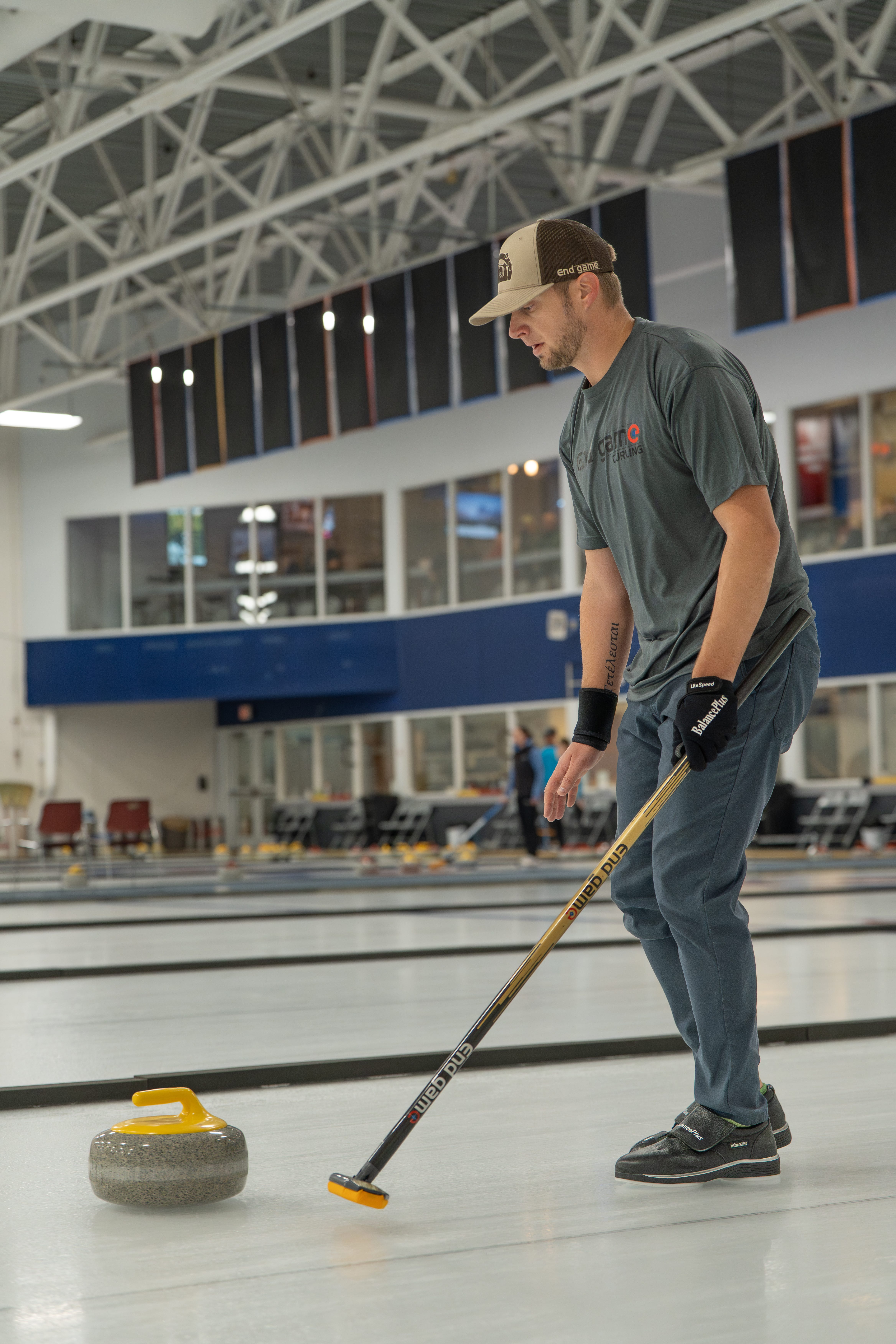
If I had subbed out one or two 5U bonspiels for playdowns or other more “competitive” bonspiels, I wonder what lessons I could have learned. I told myself that I was just focused on trying to get to a national championship, but perhaps, I just wasn’t giving myself enough permission to fail. I wasn’t giving myself opportunities to grow.
So, to the 5U curlers who are looking at the announced qualifier bonspiels for next season and planning on filling their calendars with qualifiers, I challenge you to take one or two of those off of your calendar, and add something else in. Add a funspiel. Add a cashspiel. Step out of your comfort zone and try something different. Let yourself grow.
Arena Playdowns Results
Pacific Northwest
Women
Champion: Roozee (Bend Curling Club)
Runner-Up: Avery (Boise Curling Club)
For the second consecutive year, Boise’s Rhiannon Avery was challenged by Gabi Roozee of Bend Curling Club for the right to represent the Pacific Northwest at arena nationals. Last year, Avery swept the best-of-three to earn the berth, where she advanced into the playoffs. The two teams met again at Seattle’s Granite Curling Club for a rematch.
The first game was a back-and-forth affair with Roozee scoring four in the second end, only to give up a steal of four in the fourth end. Facing a 6-4 deficit, she went on to score five points unanswered over the next three ends to take a 9-4 victory.
In game two, Roozee got a fortunate bounce from a Boise stone to set up a force in the first end. The Bend skip avoided disaster in the second end, just squeaking her stone by guards to score one. The Oregonians loaded up the house in each of their next two ends, setting up consecutive steals of two points to take a 5-1 lead going into the break.
Avery had a shot to cut the deficit to one in the fifth end, but her rock had one of the more extreme picks I have seen and only earned two points back. The early steals turned out to be too much to overcome for the reigning regional champions, earning a sweep and a trip to Irving, Texas in November for Team Roozee.
Men
Champion: Jones (Boise Curling Club)
For at least the third consecutive year, the Pacific Northwest region only had one men’s team register for the regional playdown. It is the third different team from the third different club over that time frame. Boise Curling Club’s Joshua Jones rink will be representing the region at nationals in Texas.
Mountain Pacific
Women
Champion: Connelly (Wine Country Curling Club)
Runner-Up: Bonache (Wine Country Curling Club)
The MoPac region saw registrations drop to two teams for their women’s arena playdowns. Returning regional champion, Jordan Connelly faced off against her teammate from last season, Anne Bonache, for a best-of-three playdown between the two Wine Country teams. Connelly struck first, taking game one by a score of 8-5, and Bonache responded with an 8-6 victory in game two to force a rubber match.
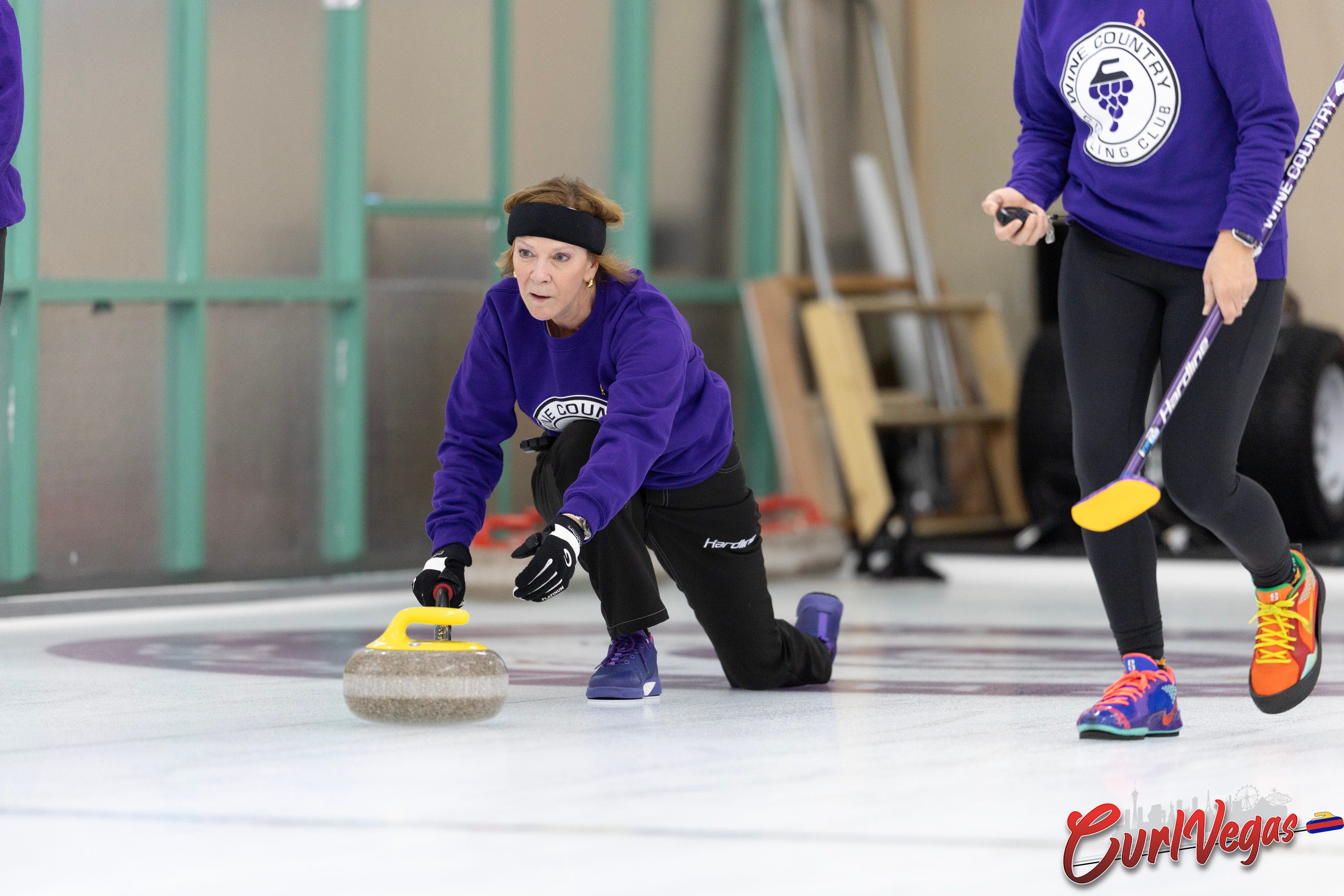
In the deciding game, the teams settled into an interesting pattern. For six ends in a row, the hammer team would score, then steal an end, and then the other team would repeat the same feat. This resulted in Anne Bonache’s rink leading by one point going into the eight end. Unfortunately for Bonache, the pattern meant it was time for Jamie Connelly to score.
Peg Anderson got the end set up as well as could be hoped, making a near freeze onto a rock in the house on her first throw. She then made the short runback with that stone, setting up Team Connelly’s deuce. Bonache couldn’t find any doubles to make throughout the end, and her tap/run on her final shot couldn’t make contact with any Connelly stones. In her return to arena nationals, Connelly has her eyes set on a podium in November following a quarterfinal finish in 2025.
Men
Champion: Spangler (Wine Country Curling Club)
Runner-Up: Skidmore (Wine Country Curling Club)
On the men’s side, what will likely turn out to be the third-largest men’s playdown in the country featured six teams. After winning nationals in 2024, Camren Spangler did not have to play down in 2025 thanks to USA Curling now awarding a berth to the defending champions. After winning a 3rd place finish at nationals in Las Vegas, Spangler returned to the same club to earn a trip to Texas.
Spangler had a tight run through pool play, going 4-1, his lone loss coming to fellow Wine Countryman (and Portuguese mixed doubles national champion) Chris Skidmore. Team Skidmore’s only pool play blemish was a first-draw loss to Park City’s Andrew Collins, setting up a rematch with Spangler. Both teams having one loss set up a one-game final for all the marbles.
Team Spangler raced out to an early lead after Spangler’s double attempt moved a Skidmore stone just far enough to score three. He followed a second end force with another score of three in the third end to take a commanding 6-1 lead. The Skidmore rink, though, clawed their way back, entering the eighth end down by just one point without the hammer. It looked like they might find a way to steal another point to the game, sitting one buried going into skip stones, but Camren Spangler stepped up. He made an outstanding draw/tap around the guard to lie shot and effectively secure the win and his fourth trip to arena nationals in four years.
Midwest
Women
Champion: Allison (St. Louis Curling Club)
Flannery Allison will be returning to her fourth consecutive Arena National Championship after once again entering unopposed for the Midwest region. Allison’s St. Louis-based rink returns one other player from last year’s national championship team which narrowly missed out on the playoffs, going 2-3 in pool play.
Men
Champion: Tesch (Cedar Rapids Curling Club)
Runner-Up: Skillman (St. Louis Curling Club)
Three teams registered for this year’s men’s Midwest playdown with two teams representing St. Louis Curling Club. Cale Tesch from Cedar Rapids rounded out the teams, having represented the Midwest Curling Association at each of the last three nationals.
Tesch, after having the bye in the first draw, battled to a 7-4 victory against St. Louis’ Sovar rink. They found their stride through that first game and proceeded to win two convincing games against Brian Skillman to earn their fourth straight berth to nationals.
Summertime Siesta?
As I shared last month, Stones & Stripes newsletters are a little more infrequent during the summer months. With the final two arena playdowns still a month away, I may not have another newsletter in that time frame.
In the meantime, if you missed it, go back and read my recap of the USA Curling National Team Announcements.
If you want even more, then stay tuned to my social media, where I hope to have another piece out on The Grand Slam of Curling website this week.
Until next time, thank you for reading and good curling!