

It's Always the Busy Season
How a busy month is leading to a busy season for Evan Workin, recipient of 2026 Oustanding Performance of the Year Award

By the time Evan Workin arrived in Bismarck, North Dakota in late March for the US Junior National Championships, it had already been a stereotypically busy season. From September through March, Workin had already competed many events, including the US Olympic Pre-Trials, multiple mixed doubles events, the USA Men’s National Championship, and Dakota club playdowns.
After skipping his Fargo-Moorhead Curling Club team to a quarterfinal finish at club nationals on March 28th, Workin hopped in his car and drove straight to Bismarck to meet up with the junior women’s team he coached, Team Pekowitz, only making a brief stop at his home for a few hours. That championship was set to begin on March 30th.
He had no idea his life was about to get even busier.
In just his second season with the Pekowitz rink, the junior women’s team rattled off five consecutive wins after starting 2-2 to win their first junior title and a berth at next year’s World Junior Championships in Aberdeen, Scotland. Even then, Workin had little time to enjoy that victory.
Just nine days after the team he coached won a national title, Evan was back on the ice skipping a team at the mixed fours national championships in Denver, Colorado. Attending his third national event in a month, his team again came out on top, defeating the reigning multi-time national champions in an extra end.
In a year filled with multiple impressive international showings by US curlers, Evan Workin’s coaching and playing success in such a condensed time frame landed him the USA Curling award for the 2026 Oustanding Performance of the Year.
“It was so much within a tight time frame there that it was hard to think about,” said the 36-year-old. “(It) took me a little bit of time just to process everything that happened.”
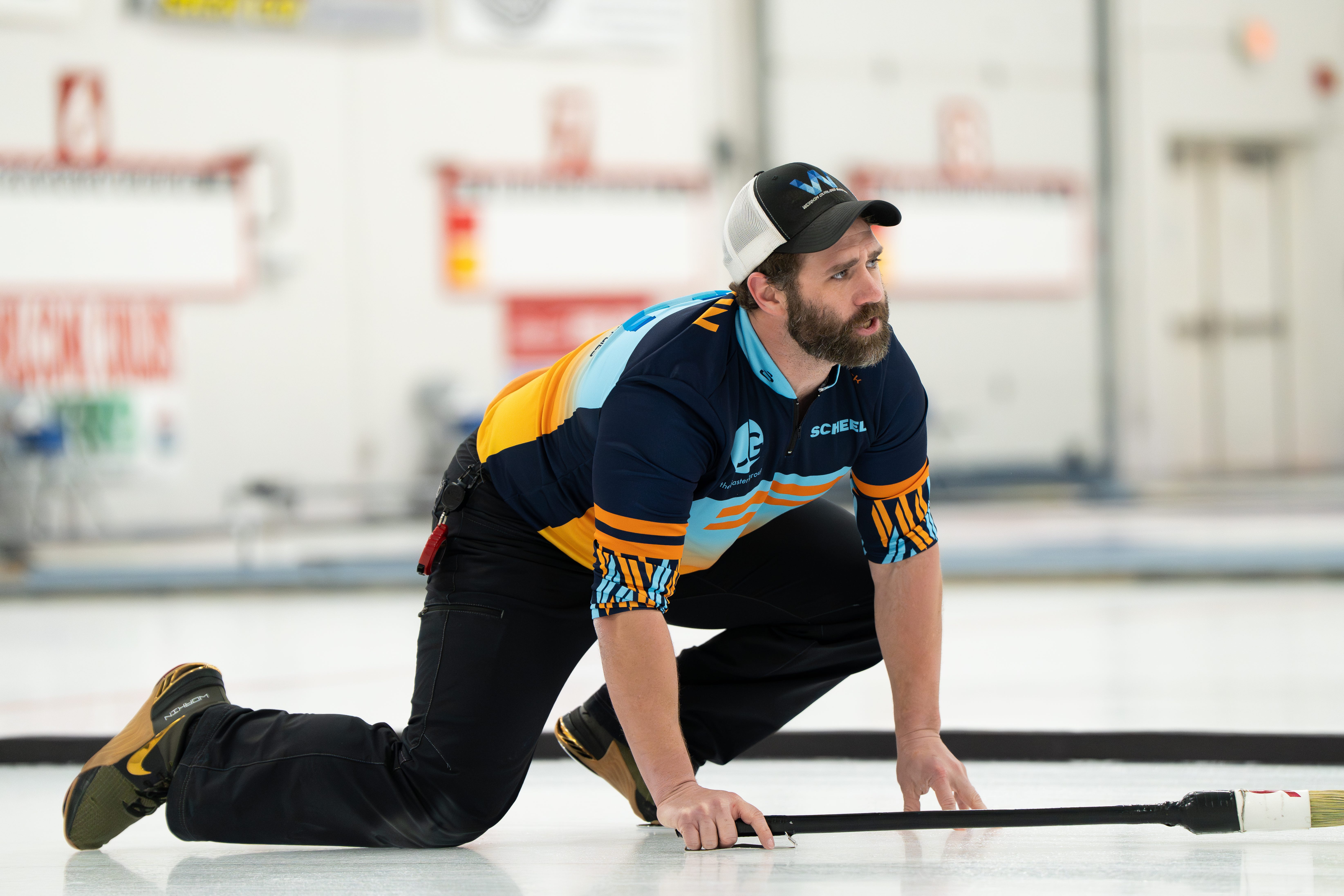
Even after the whirlwind month Workin had in the spring, he had to get right back to work. When I asked him if he eventually did find time to sit down and think back to what he and his teams had accomplished, he admitted he has reflected on the season that was, including the struggles, the work to fix those struggles, and the corrections that followed.
“I think the part you reflect on the most is the effort and the work you put in for everything. It just makes it that much more enjoyable.”
But as he sits on his deck late at night, he can’t help but think one thing.
“Holy crap, there’s a lot coming down my way here in the next year,” reflected Workin.
Not only is Evan headed to Scotland to coach Team Pekowitz at Junior Worlds, but he’s hoping to be headed with his four-person team to the World Mixed Championships as well. As of this writing, World Curling had not yet found a host for Mixed Four Worlds for the upcoming season. He hopes they’ll be able to find a host so his team can compete internationally while also reuniting with friends he made at the 2018 world championship.
All that will keep him busy once again. As if he didn’t have enough on his plate already, he confirmed he’ll continue playing on tour with Team Hodek this year as the team attempts to return to the men’s national championship once again.
“I don’t really think there’s on days and off days really anymore,” said Workin. “I really don’t know what a weekend is anymore, even in the summertime. It’s just the next day.”
A Collaborative Coaching Approach
I couldn’t help but wonder how he keeps all his ducks in a row between coaching, playing, and practicing, and Evan didn’t hesitate to credit his junior women’s team. He pointed out that all members of the team are “super type A” and very organized, which in turn, helps him to stay organized.
After two seasons with the team, Workin has been able to find his place within the team, earn their trust, and learned how to communicate with what they need.
“They’ve helped me be a lot more adaptable to each person,” he reflected. “They’re all different, and they all need to be coached a specific way and what you’ve got to do to help get the most out of them and help make them better.”
Their growth together allowed Team Pekowitz to take a massive step forward last season. Workin gushed about the team’s progress, not just in the junior level but also at the women’s level as well. In just a few events, he saw the team’s determination and growth as they began to play in more women’s events.
Evan shared one of the reasons he has enjoyed working with this team is their willingness to tell him about they need from him. In one case, it involved yelling.
If you haven’t had a chance to watch Evan Workin play, I think it’s fair to describe him as an emotional, intense competitor. Regularly, when tuning into a national championship (or in the times I have competed in the same event as Evan), it’s a common occurrence to hear his voice going out partway through the event. The irony wasn’t lost on me when Workin shared that his players have asked him to yell at them more.
“I’d never been told that before,” he quipped.
He noted he plays one way and coaches another, but it’s this approach that helps him to meet Team Pekowitz where they’re at. It clearly paid off for them in Bismarck.
Learning from Everyone
Workin embracing the opportunity to learn from the team he coaches falls right in line with his own junior roots in the sport. He’s willing to learn from anyone and everyone.
When asked if there were any people that were instrumental to his growth in the sport, Evan rattled off a list of names like Frank Podoll and 1972 world silver medalist John Aasand. It quickly became clear that he will soak up knowledge and information from anyone willing to share.
Workin started curling in Fargo, North Dakota shortly after the 2002 Olympics, and as a 13-year-old would routinely pick the brains of the best players in the club. His favorite question: Why?
While some adults may get annoyed when a teenager asks them that question, it’s a question the 36-year-old Workin enjoys hearing himself.
“I love hearing ‘Why?’ from kids. When they ask me that, that means they’re curious.”
It’s this open-mindedness that has allowed Workin to learn from anyone and everyone. It’s a reason why he loves traveling to meet curlers from anywhere. The more people he meets, the more he can learn from them.
Workin also pointed out the impact that his wife, Rachel, has had on him. The two compete together in mixed doubles and she is the vice-skip on their national champion mixed fours rink. Before they were spouses and even before they were dating, the two were teammates.
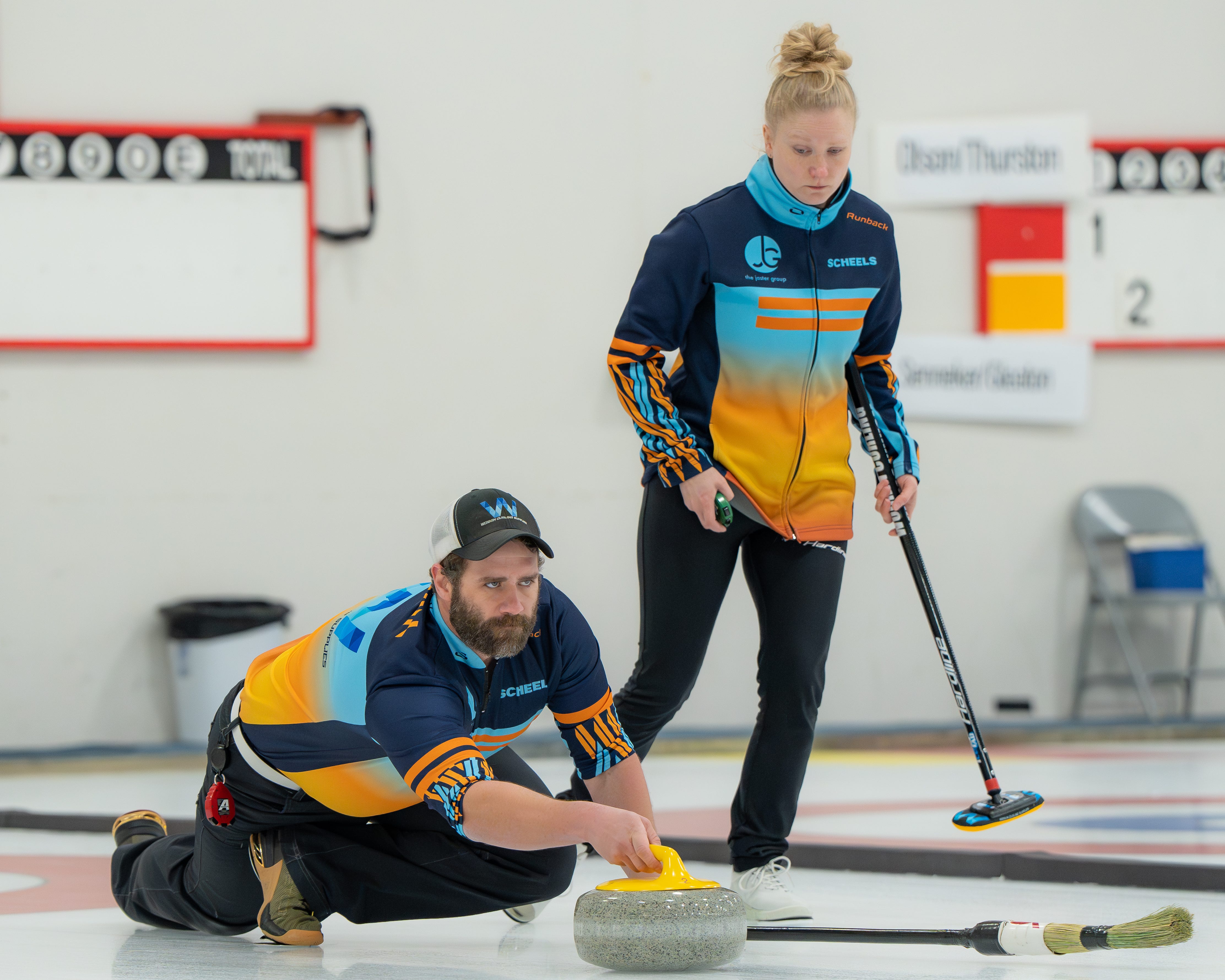
“The first time we curled together was actually in our mixed playdowns. We were still juniors. She hardly said anything to me the whole weekend,” laughed Workin.
Evan shared that Rachel played a big part helping him calm down significantly in games. When he was younger, she called him out on his intensity, imploring Evan to “mellow out.”
“She did it in a great way. She’s definitely really helped steady the hand.”
Passing on Advice
Workin has spent 24 years learning the sport from anyone and everyone around him. While much of that knowledge is being imparted upon junior curlers, I thought I’d ask him to share some of that knowledge for those of us who are long past junior eligibility.
When asked about the best advice he ever received, Workin thought back to a junior camp in Bismarck where Bennett Tucker showed the campers various scenarios from the Olympics, proclaiming each decision a dumb call.
“He goes, ‘You guys, strategy is the least important part about curling. If you can’t execute, strategy is irrelevant,’” recalled Workin.
It’s advice he now imparts upon junior curlers himself.
“We have to be able to execute a lot of these things and stop getting so hung up on these little details. (Strategy) doesn’t matter if we can’t even be close. It just kind of gets you back to working on your fundamentals and know how to throw a rock decently well to be able to execute.”
And to improve execution as a team, Workin shared with me the advice he learned from his experiences: bonspiel when you can and try to play with as many people as possible. In playing with different people, you can start to see what you can do to help your teammates succeed. If you can help them succeed, they’re going to do the same for you.
Evan recalled working with coach Sandra McMakin.
“She always asked us, ‘What percentage of the rocks do you throw?’ 25% of the rocks. She’s like ‘Well, what are you doing the other 75% of the time?’
There’s your role, but what can you do to help your teammate be better in that 75% of the time?”
Clearly, that advice made an impact on Workin. In the 2025-2026 season alone, he played at three national championships with three entirely different rosters and coached another team altogether. He’ll have a lot on his plate in the upcoming season, but I don’t know that he’d have it any other way.